Industrial Paint Types Explained: QD, PU, NC, Epoxy & Stoving
If you buy industrial paint for a factory, workshop, production line, or manufacturing facility, you have probably come across terms like QD, PU, NC, Epoxy, and Stoving.
But what do these industrial paint types actually mean? Where are they used, and which coating is best for different industrial applications?
This guide explains the key differences between QD, PU, NC, Epoxy, and Stoving coatings, including their applications, advantages, limitations, and when to use each system.
What Are the Different Types of Industrial Paint?
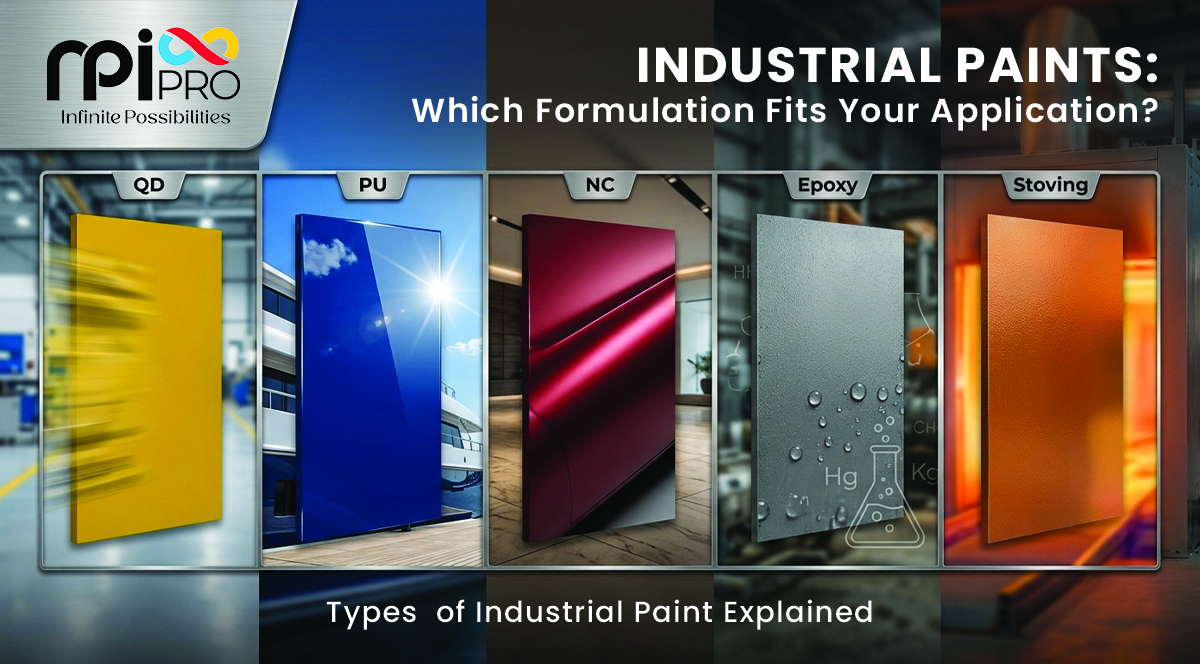
The major industrial coating systems covered here are Quick Dry (QD), Polyurethane (PU), Nitrocellulose (NC), Epoxy, and Stoving enamel. Each coating system has different drying, curing, durability, chemical resistance, and application requirements.
QD (Quick Dry)
What it is:
QD, or Quick Dry paint, is a fast-drying alkyd enamel designed for applications where a shorter turnaround time is important. It can be touch-dry in around 15–30 minutes and handle-dry in approximately 2–4 hours.
Best for:
General industrial applications where fast drying matters, including machinery, equipment, racks, storage structures, and maintenance repainting where waiting overnight is not practical.
Limitations:
QD coatings are generally softer than PU or stoving coatings and offer lower chemical and scratch resistance. They are suitable for general protection but may not be the first choice where a premium, highly durable finish is required.
PU (Polyurethane)
What it is:
PU, or Polyurethane paint, is a two-component coating system consisting of a base and hardener. It cures through a chemical reaction to provide a hard, glossy, and durable finish.
Best for:
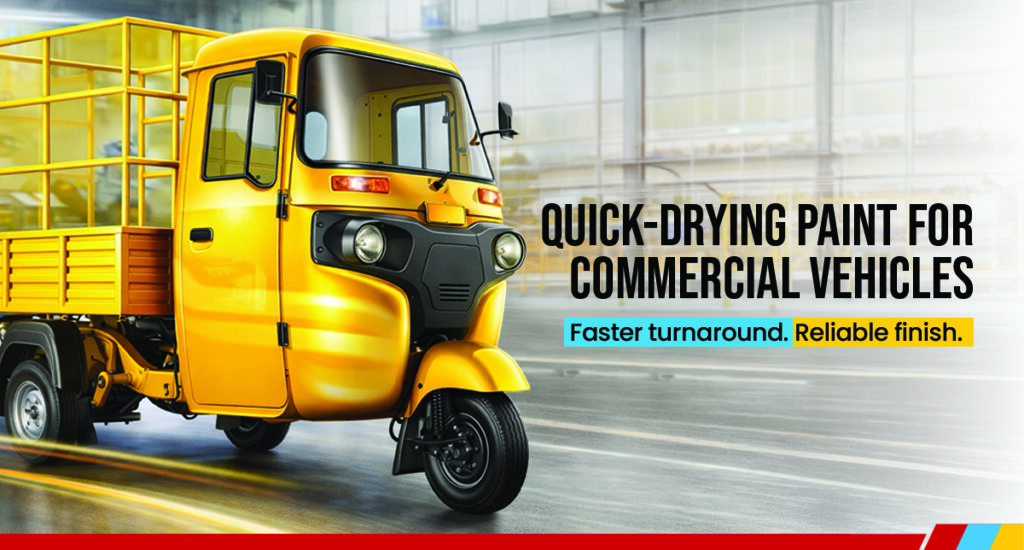
Automotive refinishing, wood furniture, commercial vehicles, and industrial applications requiring a combination of high gloss, durability, and surface protection. PU can also be used as an industrial topcoat over epoxy primers.
Limitations:
PU coatings require precise mixing and have a limited pot life, typically around 3–4 hours after mixing. They generally dry more slowly than QD coatings and have a higher cost.
NC (Nitrocellulose)
What it is:
NC, or Nitrocellulose paint, is a fast-drying lacquer that is supplied as a single-pack system and dries primarily through solvent evaporation.
Best for:
Wood finishing, furniture and interior applications, automotive primer surfacers, and quick-spray applications where fast drying is more important than extreme hardness.
Limitations:
NC coatings generally form a softer film and are not suitable for environments requiring high chemical or abrasion resistance. They can also yellow over time on light-coloured surfaces.
Epoxy
What it is:
Epoxy paint is a two-component coating system known for strong adhesion, chemical resistance, and anti-corrosion protection.
Best for:
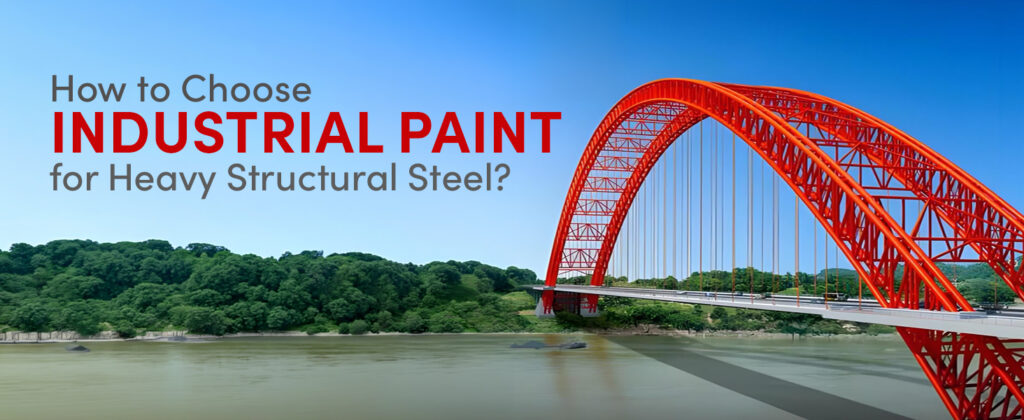
Heavy-duty industrial environments such as chemical plants, industrial floors, storage tanks, marine applications, and structural steel exposed to corrosive conditions.
Epoxy coatings are also commonly used as a primer or intermediate coating under PU topcoats to create a more complete industrial coating system.
Limitations:
Epoxy has poor UV resistance and can chalk or lose its appearance when exposed to sunlight for extended periods. For outdoor applications, it generally needs a suitable UV-resistant topcoat. Accurate mixing is also important.
Stoving Enamel (Baking Enamel)
What it is:
Stoving enamel, also known as baking enamel, is a coating system that cures at elevated temperatures, typically in an oven at around 120–180°C. The process produces a hard, smooth, and consistent film.
Best for:
High-volume manufacturing applications where consistent factory-grade finishing is required. Common applications include electrical panels, automotive OEM components, white goods, office furniture, and bicycle frames.
Limitations:
Stoving coatings require an oven or controlled heating process. Because of this, they are not suitable for on-site application or very large structures that cannot be placed inside a curing oven.
Which Industrial Paint Should You Choose?
The right industrial coating depends on the application, required durability, drying time, environmental exposure, and production process.
| Requirement | Recommended Coating |
|---|---|
| Fast drying for on-site or maintenance work | QD |
| Tough, glossy and durable finish | PU |
| Fast wood and furniture finishing | NC |
| Chemical and corrosion protection | Epoxy |
| High-volume manufacturing with oven curing | Stoving |
Quick Decision Guide
- Need fast drying for industrial maintenance? → QD
- Need a tough, glossy and durable finish? → PU
- Need fast finishing for wood or furniture? → NC
- Need serious chemical and corrosion protection? → Epoxy + PU topcoat
- Need consistent finishing for volume manufacturing? → Stoving
Can Different Industrial Paint Systems Be Used Together?
Yes. Industrial coating systems are often combined to achieve specific performance requirements.
Common coating combinations include:
- Epoxy primer + PU topcoat for industrial protection and improved outdoor durability.
- Zinc-rich primer + epoxy intermediate + PU topcoat for heavy corrosion protection.
- NC sealer + PU topcoat for premium wood and furniture finishing.
The most important factor when combining coating systems is compatibility. Always check the recommended coating system and application specifications before applying different products together.
QD vs PU vs NC vs Epoxy vs Stoving: What Is the Difference?
The main difference between these industrial paint systems is their drying or curing method, hardness, durability, chemical resistance, application method, and intended environment.
QD focuses on fast drying, PU on a hard and durable finish, NC on fast lacquer finishing, Epoxy on chemical and corrosion protection, and Stoving on controlled, high-volume factory production.
Frequently Asked Questions About Industrial Paint
Which industrial paint dries the fastest?
QD and NC are among the faster-drying options, making them suitable for applications where turnaround time is important. The actual drying time depends on the product formulation and application conditions.
Which industrial paint is best for corrosion protection?
Epoxy coatings are commonly used where strong adhesion, chemical resistance, and corrosion protection are required. For demanding systems, epoxy may be combined with other primers and a PU topcoat.
Which industrial paint gives a high-gloss finish?
PU coatings are commonly selected when a hard, glossy, and durable finish is required, particularly for automotive, furniture, vehicle, and industrial applications.
What is stoving paint used for?
Stoving paint is used for factory and high-volume manufacturing applications where the coated component can be cured in an oven. It is commonly used for electrical panels, automotive OEM components, white goods, office furniture, and bicycle frames.
Can epoxy and PU coatings be used together?
Yes. Epoxy primer and PU topcoat are a common multi-layer industrial coating approach, particularly when both corrosion protection and improved outdoor durability are required. Compatibility between specific products should always be verified.
Real Paints Industrial Coatings
Real Paints manufactures QD, PU, NC, Epoxy, and Stoving coatings for a range of industrial applications.
For industrial coating system recommendations and product-related requirements, contact Real Paints at info@realpaints.in.