What Is Quick-Drying Paint for Commercial Vehicles?
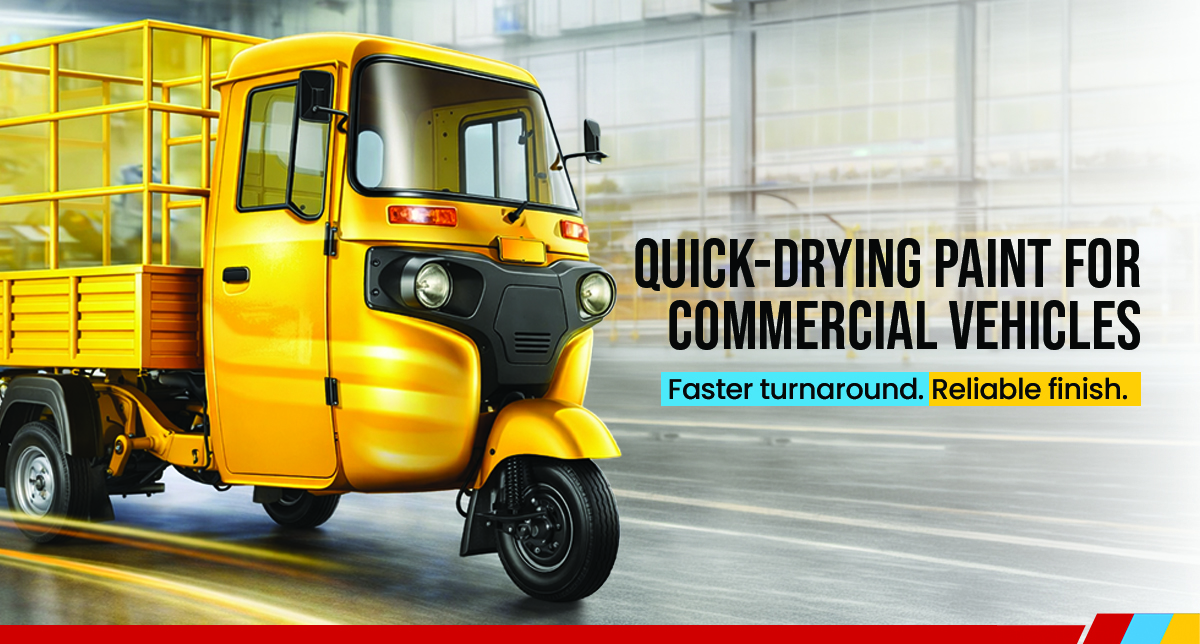
Quick-drying paint for commercial vehicles is an automotive paint formulated to reduce the time required for a paint layer to dry between application stages. It can help workshops complete painting and refinishing work faster while delivering the required finish and performance.
Commercial vehicles such as trucks, buses, trailers, tankers, and delivery vehicles often need to return to service quickly. Long drying times can increase workshop time and delay vehicle operations. This is where quick-drying paint systems can be useful.
Depending on the paint technology, drying can happen through solvent evaporation, chemical curing, or a combination of both.
What Is Quick-Drying Paint?
Quick-drying paint is an automotive or industrial paint designed to achieve its required drying stage in less time than conventional formulations.
A typical vehicle painting process may include:
Surface Preparation → Primer → Basecoat → Topcoat → Drying/Curing
Quick-drying formulations can reduce the waiting time between these stages, helping make the overall painting process more efficient.
However, quick drying does not mean instant curing. A paint may become touch-dry while still requiring additional time to achieve its final hardness, resistance, and performance.
Why Is Quick-Drying Paint Important for Commercial Vehicles?
Commercial vehicles are closely connected to daily business operations. Trucks, buses, trailers, and fleet vehicles may need to return to the road quickly after manufacturing, maintenance, repair, or repainting.
Quick-drying paint systems can provide several practical benefits:
Faster Turnaround Time
Reduced drying time can help workshops complete painting and refinishing jobs faster.
Improved Workshop Productivity
When less time is spent waiting between coats, painters can manage their workflow more efficiently.
Faster Repairs
For commercial vehicles requiring partial repainting or refinishing, quick-drying systems can help reduce vehicle downtime.
Consistent Finish
When applied correctly, modern quick-drying automotive paints can provide a smooth and uniform finish while maintaining the required appearance and performance.
How Does Quick-Drying Automotive Paint Work?
The drying process depends on the type of paint system being used.
In some paint systems, solvents or other carriers evaporate after application. In other systems, particularly 2K paints, a chemical reaction between the paint and hardener helps the paint cure and develop its final properties.
The drying process can be affected by:
- Temperature
- Humidity
- Air movement
- Film thickness
- Paint chemistry
- Mixing ratio
- Application method
This is why the drying time specified by the manufacturer should always be considered under the recommended application conditions.
How Long Does Quick-Drying Paint Take to Dry?
There is no single drying time for all quick-drying commercial vehicle paints. Drying time varies according to the paint formulation, temperature, humidity, film thickness, airflow, mixing ratio, and application method.
It is also important to distinguish between drying and curing. A paint may become dry to the touch before it reaches its final cured properties.
For accurate drying and curing times, always follow the manufacturer’s technical data sheet and recommended application conditions.
1K vs 2K Paint for Commercial Vehicles
Quick-drying commercial vehicle paints are available in different technologies, including 1K and 2K systems.
What Is 1K Paint?
1K paint is a single-component paint system that generally does not require a separate hardener before application. Some 1K formulations are designed for quick drying and easy application.
What Is 2K Paint?
2K paint is a two-component system, typically consisting of paint and a hardener. These systems can provide properties such as durability, chemical resistance, and weather resistance, making them suitable for demanding commercial vehicle applications.
The right choice depends on the vehicle, substrate, application requirements, workshop conditions, and desired performance.
What Factors Affect Automotive Paint Drying Time?
Even a quick-drying paint can behave differently depending on the application environment.
Temperature
Temperature can influence solvent evaporation and chemical curing.
Humidity
High humidity may affect drying and curing for certain paint technologies.
Film Thickness
Applying paint too heavily can increase drying time and may affect the final finish.
Airflow
Proper ventilation can support drying, while excessive airflow may introduce dust onto the wet surface.
Mixing Ratio
For 2K systems, using the correct paint-to-hardener ratio is essential for proper curing and performance.
Where Is Quick-Drying Paint Used?
Quick-drying paint systems can be used for a wide range of commercial and industrial vehicles, including:
- Trucks
- Buses
- Trailers
- Tankers
- Pickup vehicles
- Delivery vehicles
- Construction vehicles
- Fleet vehicles
- Light commercial vehicles
The specific paint system should be selected according to the vehicle’s substrate, operating conditions, application requirements, and desired finish.
Is Quick-Drying Paint Durable?
Yes, quick-drying paint can also be durable, but drying speed alone does not determine durability.
A good commercial vehicle paint system should provide the right balance of:
- Drying speed
- Adhesion
- Finish quality
- Weather resistance
- Colour and gloss retention
- Chemical resistance
- Mechanical durability
Proper surface preparation and application are equally important. Even a high-performance paint may not perform as expected if the surface is not properly prepared or the recommended application procedure is not followed.
Quick-Drying Paint Systems from Real Paints
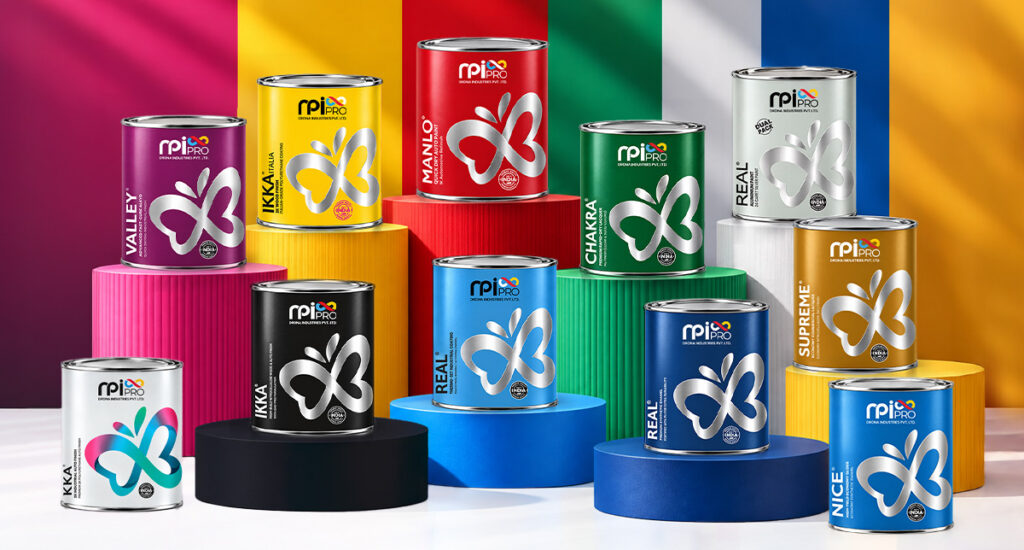
Real Paints (Drona Industries) manufactures its own resin in-house rather than trading formulated paint. Its MANLO QD and VALLEY QD ranges are designed as quick-drying systems for automotive and commercial vehicle refinish applications.
Real Paints also offers the IKKA PU Automotive range for higher-durability 2K applications.
Actual performance depends on the substrate, application conditions, product formulation, and adherence to the technical data sheet for the specific paint system.
Quick-Drying Paint vs Conventional Paint
| Feature | Quick-Drying Paint | Conventional Paint |
| Drying time | Generally shorter | May be longer |
| Workshop productivity | Can support faster workflow | May require more waiting |
| Commercial vehicle use | Suitable systems available | Commonly used |
| Durability | Depends on formulation | Depends on formulation |
| Final performance | Depends on complete curing | Depends on complete curing |
The actual drying time varies from one product to another, so the relevant technical data sheet should always be followed.
Frequently Asked Questions
How fast does commercial vehicle paint dry?
There is no fixed drying time for all commercial vehicle paints. It depends on the paint formulation, temperature, humidity, film thickness, airflow, mixing ratio, and application method.
Is quick-drying paint suitable for trucks?
Yes. Quick-drying paint systems can be used for trucks and other commercial vehicles when the product is designed for the specific application and substrate.
Is quick-drying paint suitable for buses and trailers?
Yes. Quick-drying paint systems can be used for buses, trailers, tankers, delivery vehicles, and other commercial vehicles when the selected system is suitable for the substrate and operating requirements.
Is 2K paint good for commercial vehicles?
2K paint systems can be suitable for commercial vehicles where durability, weather resistance, and chemical resistance are required. The correct product should be selected according to the specific application.
Does quick-drying paint mean it cures faster?
Not necessarily. Drying and curing are different processes. A paint can become touch-dry before reaching its final cured properties.
What factors affect commercial vehicle paint drying time?
Temperature, humidity, airflow, film thickness, paint chemistry, mixing ratio, and application method can all affect the drying time of commercial vehicle paint.
Conclusion
Quick-drying paint for commercial vehicles is designed to reduce painting and drying time while delivering the finish and performance required for demanding vehicle applications.
For trucks, buses, trailers, and fleet vehicles, the right paint system can help improve turnaround time, workshop productivity, and overall painting efficiency.
However, choosing paint only because it dries quickly is not enough. Factors such as adhesion, durability, weather resistance, film thickness, application conditions, and curing requirements should also be considered.
For commercial vehicle and industrial paint applications, selecting the right paint system and following the manufacturer’s recommended application process can help achieve a consistent, durable, and professional finish.
Not Sure Which System Is Right for Your Fleet?
The right quick-drying system depends on your vehicle substrate, workshop conditions, and turnaround requirements. Rather than relying only on a data sheet, Real Paints’ technical team can apply the paint to your surface and demonstrate the actual result.
Book a Free Sampling Visit
Our team applies the paint on-site so you can evaluate drying time, finish, and adhesion under your actual application conditions.