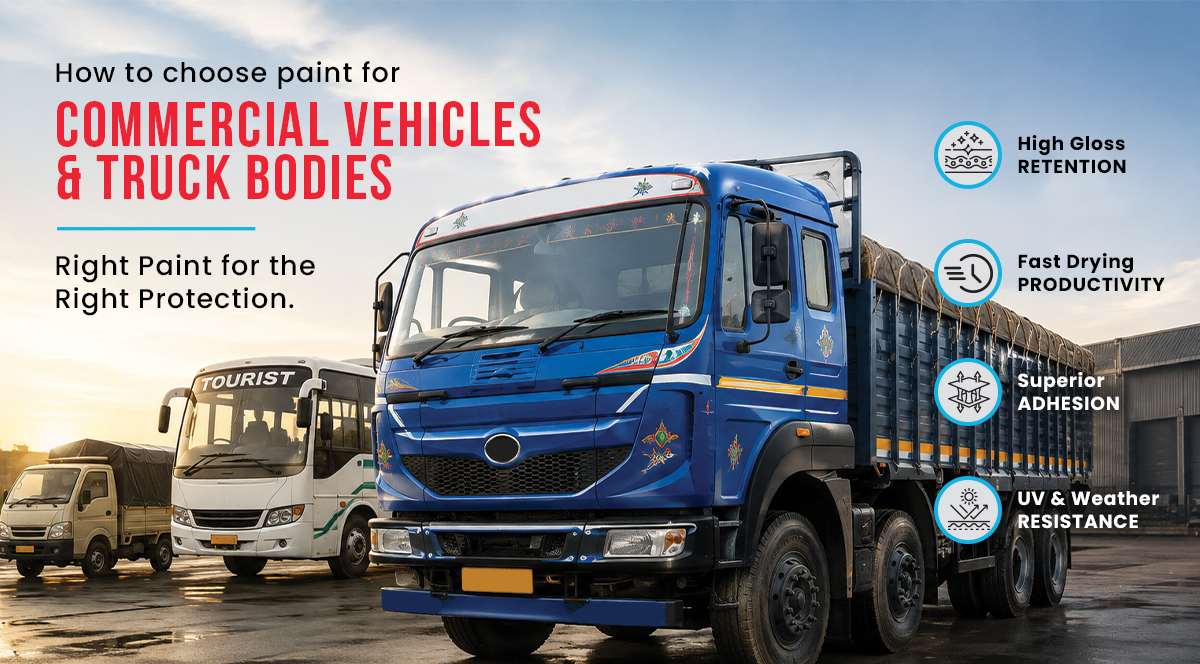
How to Choose Paint for Commercial Vehicles & Truck Bodies
A truck or trailer body needs a coating that can handle everything Indian roads throw at it: UV exposure, rain, dust, loading impact, scratches, chemicals, and constant vibration.
Choosing the right paint is not just about colour or appearance. The surface preparation, primer, topcoat, and underbody protection all play an important role in the coating’s performance and service life.
For most commercial vehicle bodies, a properly prepared steel surface with an anti-corrosion primer and durable PU (Polyurethane) topcoat is a strong choice for demanding road conditions.
Why Is Vehicle Body Coating Different from Regular Paint?
A commercial vehicle body faces much harsher conditions than normal painted surfaces:
- UV exposure — Long hours of direct sunlight can cause fading and loss of gloss.
- Monsoon rain — Continuous moisture increases the risk of corrosion, especially around joints and seams.
- Physical impact — Loading, unloading, stones, and scratches can damage the coating.
- Chemical exposure — Diesel, oil, road salt, and cargo spills can affect the paint.
- Vibration — Constant road vibration can put stress on poorly prepared coating systems.
- Fleet branding — The vehicle finish represents the company’s image and needs to maintain its appearance.
This is why regular household paint or basic enamel may not be suitable for demanding commercial vehicle applications.
The Right Coating System for Vehicle Bodies
Step 1: Surface Preparation
Surface preparation is one of the most important steps in achieving a durable finish.
For new steel:
- Remove mill scale, rust, oil, grease, and fabrication residue.
- Ensure the surface is clean and dry before painting.
For used bodies:
- Remove loose or peeling paint.
- Remove rust and sand the surface properly.
- Degrease before applying primer.
Poor surface preparation is one of the common reasons for peeling, blistering, and premature corrosion.
Step 2: Primer
Apply a suitable anti-corrosion primer to all exposed steel.
Depending on the coating system, red oxide or epoxy-based primers may be used.
Pay special attention to:
- Joints and seams
- Welded areas
- Edges and corners
- Box sections
- Underbody areas
The number of coats and required film thickness should follow the coating manufacturer’s technical specifications.
Step 3: Topcoat
PU (Polyurethane)
PU is a preferred choice for many commercial vehicle applications where durability and appearance are important.
It offers:
- Good UV resistance
- Good gloss retention
- Better scratch and handling resistance
- Durable finish
- Wide colour availability
- Suitable fleet-matching shades
For best performance, application thickness, number of coats, drying time, and curing should follow the manufacturer’s recommendations.
PU vs Synthetic Enamel
Synthetic enamel can be a lower-cost option for budget-focused or shorter-life applications. PU is generally preferred when better durability, appearance, and resistance to UV and everyday wear are required.
| Feature | PU | Synthetic Enamel |
|---|---|---|
| Durability | High | Moderate |
| UV resistance | Good | Moderate |
| Gloss retention | Good | Moderate |
| Scratch resistance | Better | Moderate |
| Initial cost | Higher | Lower |
The right choice depends on the vehicle’s usage, operating environment, expected service life, and budget.
Key Decisions for Fleet Owners
1. First Cost vs Lifecycle Cost
The lowest initial paint cost does not always mean the lowest overall cost.
A better-quality coating system may cost more initially but can help reduce repainting and maintenance over the vehicle’s service life.
Think beyond:
“What is the paint price?”
Also consider:
“How long will the complete coating system perform?”
2. Choose the Right Colour
Lighter colours such as white and silver can make dust less noticeable and absorb less heat than darker shades.
Dark colours can provide a premium appearance but may show dust, scratches, and surface imperfections more easily.
For fleet vehicles, colour should balance branding, appearance, and maintenance.
3. Don’t Ignore Underbody Protection
The underbody is exposed to water, mud, stones, road debris, and continuous vibration.
A suitable heavy-build or rubberized protective coating, where appropriate, can provide additional protection against moisture and abrasion.
Underbody protection is often overlooked but can make an important difference to overall vehicle durability.
4. What to Ask the Body Builder
Before approving the painting system, ask:
- What primer system are you using?
- How many coats of primer and topcoat?
- What is the recommended film thickness?
- Are joints, seams, and box sections being coated?
- How is the underbody being protected?
- What surface preparation method is being used?
A clear answer to these questions helps ensure that the complete coating system is being applied correctly.
Common Failures on Truck Bodies
Rust at Joints and Seams
Water can enter gaps and poorly protected areas, leading to corrosion.
Paint Peeling Around Floor Edges
Loading and unloading can damage the coating and allow moisture to reach the steel.
Fading on Roof and Side Panels
Continuous UV exposure can cause poor-quality or unsuitable topcoats to lose colour and gloss.
Underbody Corrosion
Water, mud, stones, and road debris can make the underbody one of the first areas to develop corrosion.
Simple Prevention Checklist
- Primer on all exposed steel surfaces
- Proper surface preparation before painting
- Suitable PU topcoat for demanding applications
- Proper protection of underbody areas
- Regular inspection of joints, seams, and edges
- Touch up scratches and transport damage quickly
- Clean mud, salt, oil, and other contaminants regularly
Frequently Asked Questions
What is the best paint for a truck body?
For many commercial vehicle applications, PU (Polyurethane) is a preferred topcoat where durability, UV resistance, appearance, and scratch resistance are important.
Is PU paint good for commercial vehicles?
Yes. PU is suitable for many commercial vehicle bodies because it offers a combination of durability, appearance, UV resistance, and resistance to everyday wear.
Which primer is best for a truck body?
A suitable anti-corrosion primer should be selected based on the steel substrate, exposure conditions, and topcoat system. Red oxide and epoxy-based primers are commonly used options.
How can I prevent rust on a truck body?
Proper surface preparation, a suitable anti-corrosion primer, correct topcoat application, underbody protection, and regular inspection are key to reducing corrosion.
Final Takeaway
A durable truck body coating is not just about choosing the right paint. Surface preparation, primer, topcoat, film thickness, underbody protection, and maintenance all work together.
For demanding commercial vehicle applications, a properly specified PU coating system can provide a strong combination of durability, appearance, UV resistance, and everyday protection.
Real Paints supplies automotive and industrial coating systems for vehicle body builders and industrial applications.
For specifications and bulk pricing:
Email: info@realpaints.in
Website: www.realpaints.in