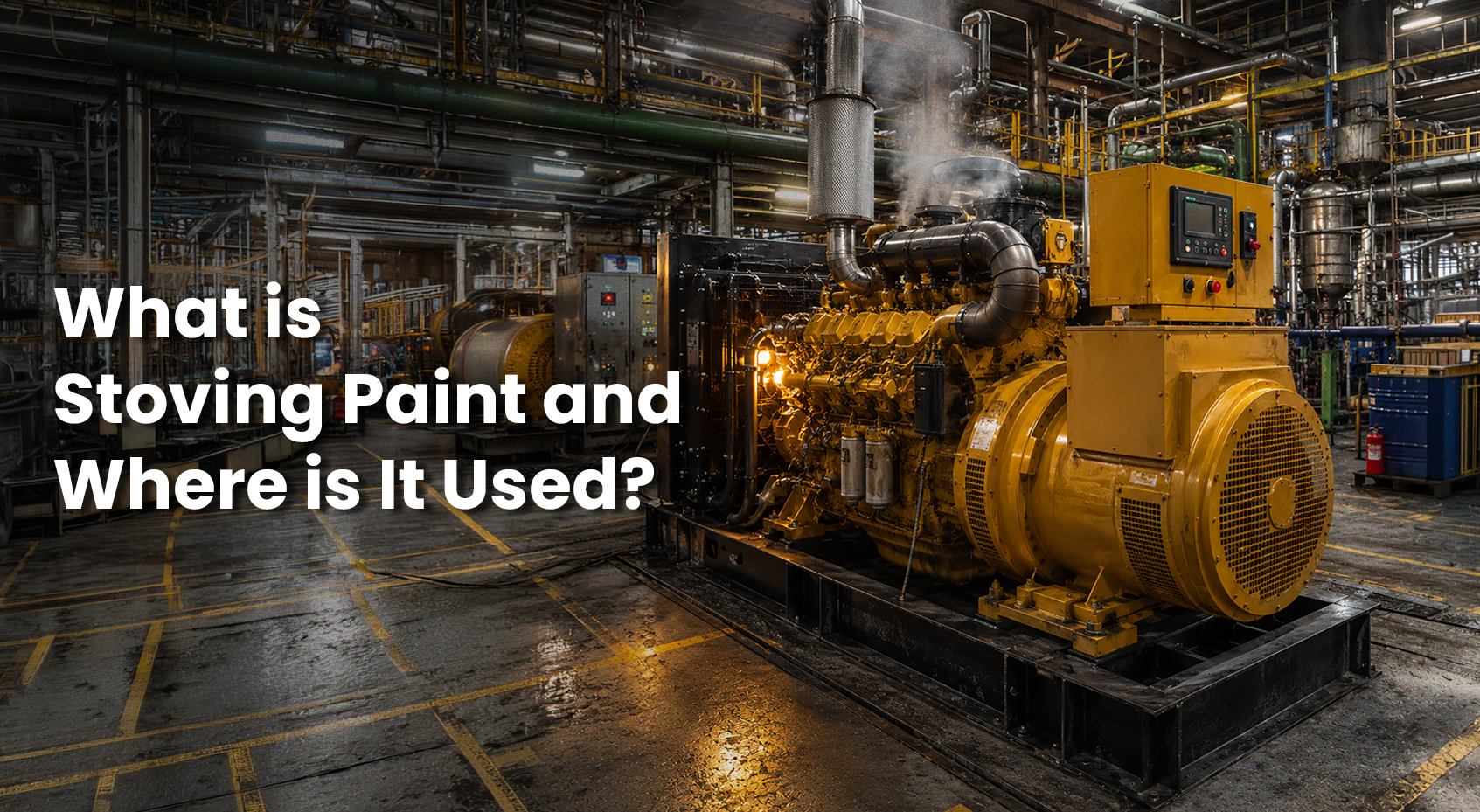
What is Stoving Paint and Where is It Used?
You’ve seen the finish on electrical panels, washing machines, and auto parts- smooth, hard, and uniform. That’s stoving paint. It’s a heat-cured industrial coating known for its durability, consistent finish, and fast curing time. Here’s what it is and why manufacturers use it.
What is Stoving Paint?
Stoving paint (also called baking enamel) is an industrial coating that cures under heat. After the paint is sprayed onto a metal component, it is baked in an oven at 120–180°C for 20–30 minutes. The heat triggers a chemical reaction that creates a hard, durable, and long-lasting finish.
Unlike regular paint, which dries through solvent evaporation (air-dry), stoving paint changes its molecular structure during baking. This makes the coating much tougher and more resistant to wear.
Where is Stoving Paint Used?
Stoving paint is widely used on metal components that require a smooth, durable, and factory-quality finish.
- Electrical panels, switchboards, and enclosures
- Automotive OEM components (brackets, underbody parts, engine covers)
- Home appliances (washing machines, refrigerators, air conditioners)
- Office furniture (steel desks, filing cabinets, racks)
- Industrial machinery (pumps, motors, compressor housings)
- Agricultural equipment components
- Bicycle frames
- Fire extinguisher cylinders
In short, it’s ideal for metal products manufactured in high volumes where consistency, durability, and appearance matter.
Why Use Stoving Paint Instead of Normal Paint?
- Harder finish – Offers excellent scratch and abrasion resistance, making it suitable for industrial applications.
- Smoother appearance – Produces a factory-quality finish with minimal orange peel when applied correctly.
- Faster production – Fully cures in 20–30 minutes, compared to 24+ hours for most air-dry paints.
- Better chemical resistance – Withstands oils, solvents, and common cleaning agents more effectively.
- Consistent quality – Controlled oven curing ensures every batch delivers the same finish and performance.
Stoving Paint vs Air-Dry Paint
Use Stoving Paint When:
- You have an oven curing line.
- High-volume production is required.
- Components need excellent scratch or chemical resistance.
- A durable, consistent finish is essential.
Use Air-Dry Paint When:
- Components are too large for an oven.
- Painting is done on-site.
- Oven curing facilities are unavailable.
- Production volumes are low.
How It’s Applied
- Clean and degrease the component.
- Apply the paint using a spray gun, electrostatic spray, or flow-coating system.
- Bake the coated component in an oven (typically around 150°C).
- Cure for 20–30 minutes.
- The component is fully cured and ready for assembly or packing.
Things to Watch Out For
- Maintain a uniform oven temperature to ensure even curing.
- Avoid over-baking, which can cause yellowing or brittleness.
- Proper surface preparation is essential to prevent bubbling or poor adhesion.
- Apply the correct film thickness for optimum protection and durability.
Is Stoving Paint Cost-Effective?
Per litre, stoving paint costs about the same as a good-quality air-dry industrial enamel. However, because it cures in around 20 minutes, production throughput is much higher. This reduces the overall cost per finished component, making it a cost-effective solution for industrial manufacturing.
Frequently Asked Questions
Can stoving paint be used without baking?
No. Stoving paint requires oven curing to achieve its intended hardness, adhesion, and durability.
What temperature does stoving paint require?
Most stoving paint systems cure between 120°C and 180°C, depending on the product formulation.
Is stoving paint suitable for outdoor use?
Yes, certain formulations are designed for outdoor applications, depending on the performance requirements.
Conclusion
Stoving paint is a reliable industrial coating for metal components that require a durable, smooth, and consistent finish. Its fast curing time, excellent hardness, and chemical resistance make it a preferred choice across industries such as automotive, electrical, appliances, and industrial manufacturing. At Real Paints, we provide industrial coating solutions designed to deliver dependable performance and long-lasting protection.